
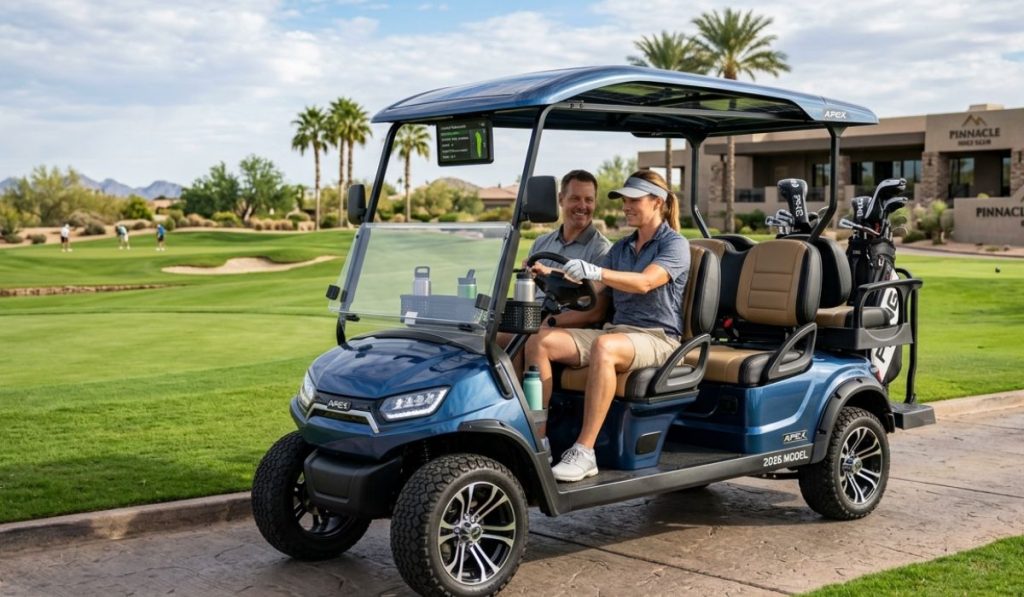
Before you buy a golf cart, it’s important to understand its price, features, maintenance, and long-term value. Today, a golf cart is more than a vehicle for golf courses. Many people use it in neighborhoods, resorts, farms, and large private properties because it offers convenient and affordable transportation. Whether you’re considering a new or used model, comparing options helps you make a smarter investment. This guide explains everything from pricing and batteries to ownership costs and shipping. You’ll also learn how to choose the right electric golf, compare it with a gas golf, understand golf maintenance, and explore the benefits of a street legal golf for everyday use.
What Is a Golf Cart?
A golf is a compact vehicle designed to carry people over short distances at low speeds. While it first appeared on golf courses, today’s models are used in neighborhoods, retirement communities, resorts, farms, warehouses, universities, and large private properties. Many buyers choose an electric golf cart because it runs quietly and produces no emissions, while others prefer a gas golf for longer trips and quicker refueling.
Today’s golf come in several sizes, including a two-seater golf, four-seater golf, and six-seater golf. Many models include premium golf features, improved suspension, touchscreens, Bluetooth speakers, and weather protection. Buyers also enjoy golf customization with lift kits, custom wheels, LED lighting, and stylish seats that match personal preferences.
Definition
A golf cart is a small low-speed vehicle designed to transport passengers over short distances. Most models travel between 15 and 25 mph, making them ideal for private communities, golf courses, parks, and commercial properties. Some upgraded models qualify as an LSV golf after meeting state safety requirements.
Common Uses
People use a golf for golf courses, gated communities, hotels, airports, campgrounds, schools, sports venues, farms, and warehouses. Many homeowners also choose a golf for neighborhoods because it offers convenient transportation for short daily trips.
Who Buys Golf?
Golf attract a wide range of buyers across America. Families often purchase a family golf cart for neighborhood travel, while businesses use them for employee transportation and maintenance work. Resorts, event organizers, golf clubs, retirement communities, and universities also depend on golf for efficient daily operations.
How Much Does a Golf in 2026?
Many buyers ask “how much is a golf” before starting their search. The answer depends on the brand, seating capacity, battery type, condition, and included accessories. The average golf cost 2026 ranges from around $3,000 for an older used model to more than $20,000 for a premium street-legal version with advanced technology.
If you’re comparing options, remember that the average price of a golf includes more than the purchase price. Registration, insurance, maintenance, battery replacement, and shipping all affect total ownership costs. Understanding these expenses makes it easier to choose an affordable golf that fits your budget.
New Golf Prices
A new golf usually costs between $7,000 and $18,000 depending on the manufacturer and equipment. Luxury models with premium seating, touchscreen displays, and a golf with lithium battery can exceed $20,000. Buyers often receive a manufacturer golf warranty, making new models attractive for long-term ownership.
Used Golf Prices
Many shoppers ask “how much is a used golf” because used models provide excellent value. A quality used golf typically costs between $3,000 and $9,000 depending on age, condition, mileage, and battery health. Always inspect the batteries carefully because golf cart battery replacement can become an unexpected expense.
Average Golf Price Comparison
| Golf Cart Type | Estimated Price (2026) |
| Basic Two-Seater | $5,000–$8,000 |
| Family Four-Seater | $8,500–$13,000 |
| Premium Six-Seater | $11,000–$17,000 |
| Street-Legal Model | $13,000–$20,000+ |
| Used Golf Cart | $3,000–$9,000 |
New vs Used Golf Cart – Which One Should You Buy?
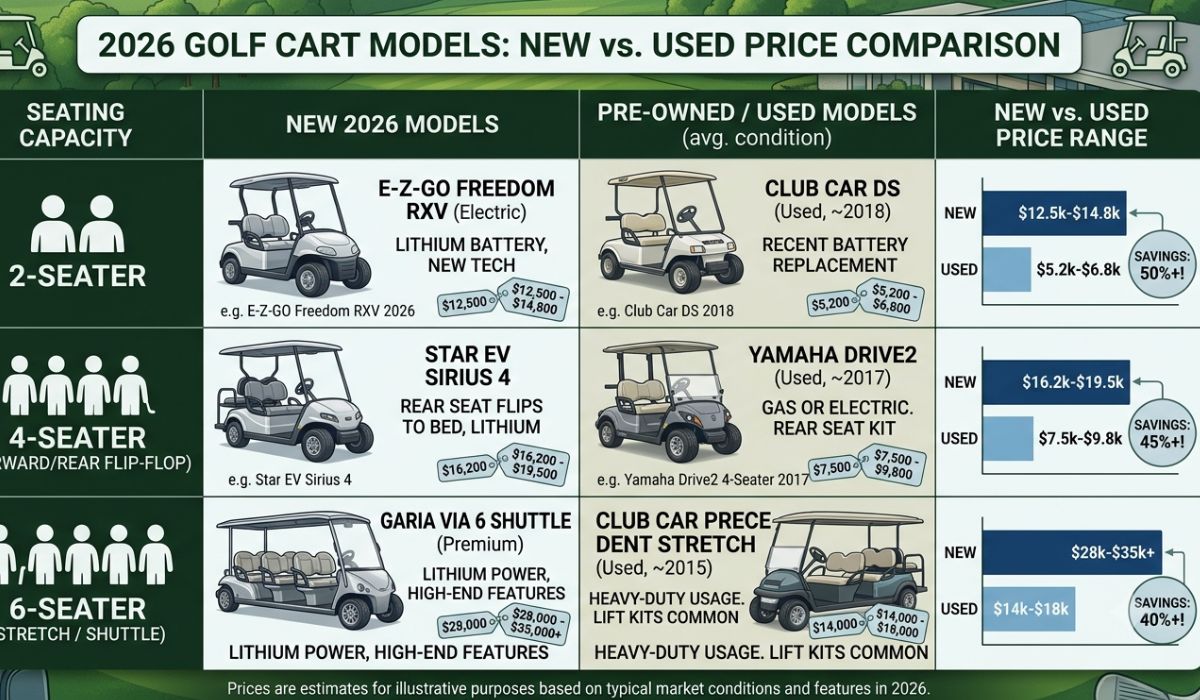
Choosing between a new and used golf depends on your budget and future plans. A new model offers modern technology, improved safety, and a warranty. A used cart costs less upfront and often delivers excellent value when properly maintained. Comparing both options helps you make a smart investment.
Think beyond today’s purchase price. Consider golf depreciation, future repairs, battery condition, resale potential, and expected usage. Buyers planning to keep their vehicle for many years often prefer a new model, while occasional users may save thousands with a carefully inspected used cart.
Pros & Cons of Buying a New Golf
A new golf cart provides the latest technology, factory warranty, and improved golf performance. It also offers better financing opportunities and lower maintenance during the first few years. However, new vehicles experience faster golf cart depreciation, making them more expensive initially.
Pros & Cons of Buying a Used Golf
A used golf cart costs less and usually retains its value well after the first owner absorbs depreciation. Before purchasing, inspect the frame, tires, brakes, and especially the battery because golf cart battery cost can significantly increase your total investment if replacement becomes necessary.
Best Choice for Different Buyers
Families often choose a golf with four seats or a golf with six seats for daily transportation. Businesses may prioritize durability and carrying capacity, while golfers usually select smaller models built specifically for course use. Matching the cart to your lifestyle always produces better long-term satisfaction.
Factors That Affect Golf Prices
Several factors influence the final price of a golf. Brand reputation, battery technology, seating capacity, condition, accessories, and road-legal equipment all affect value. Understanding these details helps buyers compare models fairly instead of focusing only on the sticker price.
A well-maintained golf cart often delivers better value than a cheaper model needing major repairs. Buyers should compare total ownership costs rather than purchase price alone. Battery replacement, maintenance, insurance, financing, and shipping all contribute to the overall investment.
Brand and Manufacturer Reputation
Leading manufacturers produce reliable vehicles with strong warranties and better resale value. Well-known brands often cost more initially because buyers trust their quality, replacement parts, and customer support.
Battery Type and Condition
The battery remains one of the most expensive components. A lithium golf cart battery lasts longer, charges faster, and requires less maintenance than a lead-acid golf battery. Battery age has a direct impact on golf value and future maintenance expenses.
Seating Capacity
Larger carts naturally cost more. A two-seater golf cart suits couples or golfers, while a four-seater golf cart and six-seater golf cart provide extra room for families, guests, or commercial transportation.
Accessories and Custom Features
Premium golf accessories increase convenience and appearance. Buyers often choose LED lights, lift kits, upgraded wheels, Bluetooth sound systems, rear seats, storage boxes, weather enclosures, and custom paint to personalize their vehicles.
Overall Condition and Age
Age alone doesn’t determine value. Service history, battery health, tire condition, frame quality, and overall appearance matter much more. A well-maintained five-year-old golf may outperform a neglected newer model and deliver stronger golf resale value over time.
Electric vs Gas Golf
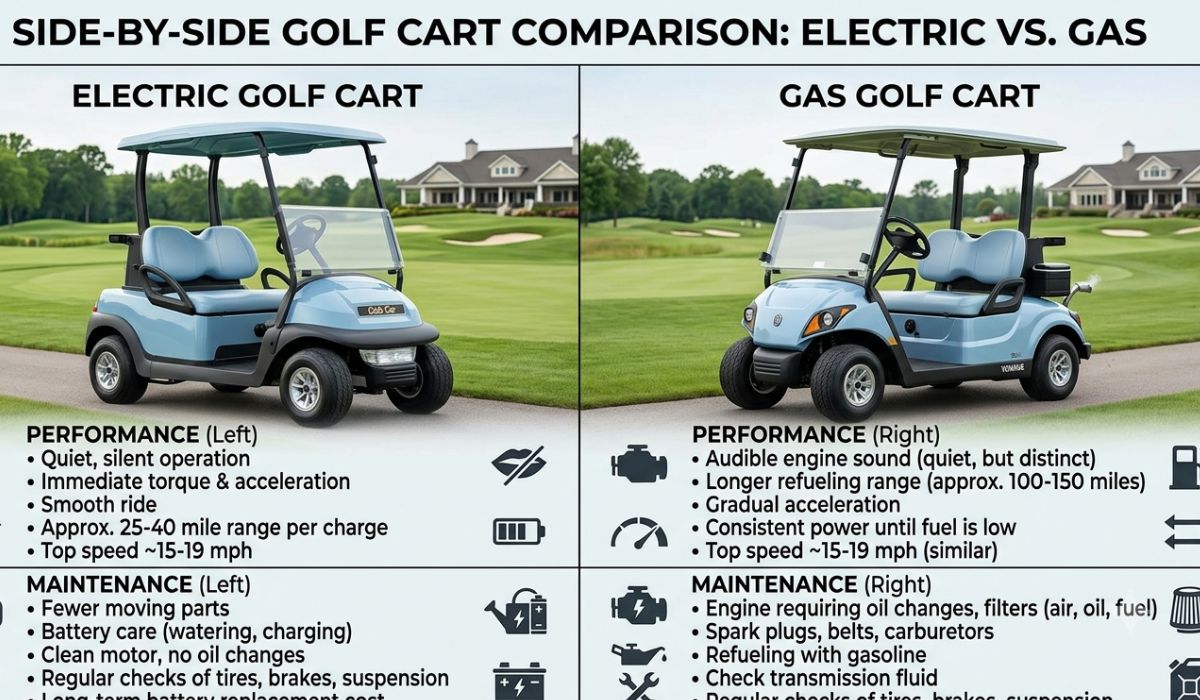
Choosing between an electric golf and a gas golf is one of the biggest decisions you’ll make. Both options offer reliable transportation, yet they serve different needs. Your driving habits, budget, and maintenance expectations will help determine which model fits your lifestyle and delivers the best long-term value.
Many buyers compare electric vs gas golf before making a purchase. Electric models have become more popular because they are quiet, environmentally friendly, and inexpensive to maintain. Gas-powered carts still appeal to users who need longer driving distances, faster refueling, and dependable performance on large properties.
Performance Comparison
An electric golf delivers smooth acceleration with very little noise. It performs well in neighborhoods, resorts, and golf courses. A gas golf offers greater driving endurance and maintains consistent power on hills or uneven terrain, making it a practical choice for farms and commercial properties.
Maintenance Requirements
Electric carts require less routine service because they have fewer moving parts. Owners mainly focus on golf cart charging, battery inspections, and tire care. Gas carts need regular oil changes, spark plug replacements, air filter cleaning, and engine servicing, which increases golf cart maintenance cost over time.
Cost Comparison
The purchase price of both models is often similar, although electric versions equipped with a lithium golf cart battery may cost more initially. However, lower energy costs and fewer repairs usually reduce long-term ownership expenses. Gas carts consume fuel regularly and require additional engine maintenance throughout their lifespan.
Which Golf Is the Better Option?
If you want quiet operation and lower running costs, an electric model is usually the smarter investment. Buyers who frequently travel long distances or work on large properties may benefit from a gas-powered vehicle. Your daily usage should always guide the final decision.
| Feature | Electric Golf Cart | Gas Golf Cart |
| Noise Level | Very Quiet | Moderate Engine Noise |
| Maintenance | Low | Higher |
| Fuel Source | Battery | Gasoline |
| Running Cost | Lower | Higher |
| Best For | Communities & Golf Courses | Farms & Large Properties |
Lithium vs Lead-Acid Golf Batteries
The battery is the heart of every golf. Choosing between a lithium golf cart battery and a lead-acid golf cart battery affects performance, maintenance, charging time, and long-term ownership costs. While lithium batteries cost more initially, many buyers recover that investment through lower maintenance and longer service life.
Many owners ask about lithium vs lead-acid batteries before purchasing a new cart. Lead-acid batteries remain affordable and widely available. Lithium batteries have become increasingly popular because they charge faster, weigh less, and deliver consistent power throughout every trip.
Key Differences
A lithium golf battery weighs much less than a lead-acid battery and provides steady performance during the entire drive. Lead-acid batteries gradually lose power as they discharge and require regular water maintenance to stay in good condition.
Battery Lifespan
One of the most common questions is how long do golf cart batteries last. Lithium batteries often last eight to ten years with proper care. Lead-acid batteries generally serve four to six years depending on charging habits, climate, and overall maintenance.
Charging Time and Efficiency
Modern lithium batteries reduce golf cart charging time significantly. Most recharge within a few hours, while lead-acid batteries usually require overnight charging. Faster charging allows owners to spend more time driving and less time waiting.
Which Battery Offers Better Value?
Although lithium batteries cost more upfront, they reduce maintenance, improve driving range, and extend battery life. Buyers planning long-term ownership often find that lithium delivers greater value despite the higher initial investment.
| Battery Type | Lithium | Lead-Acid |
| Average Lifespan | 8–10 Years | 4–6 Years |
| Maintenance | Very Low | Regular Watering |
| Charging Time | Faster | Slower |
| Weight | Lightweight | Heavy |
| Initial Cost | Higher | Lower |
Popular Golf Cart Brands in 2026
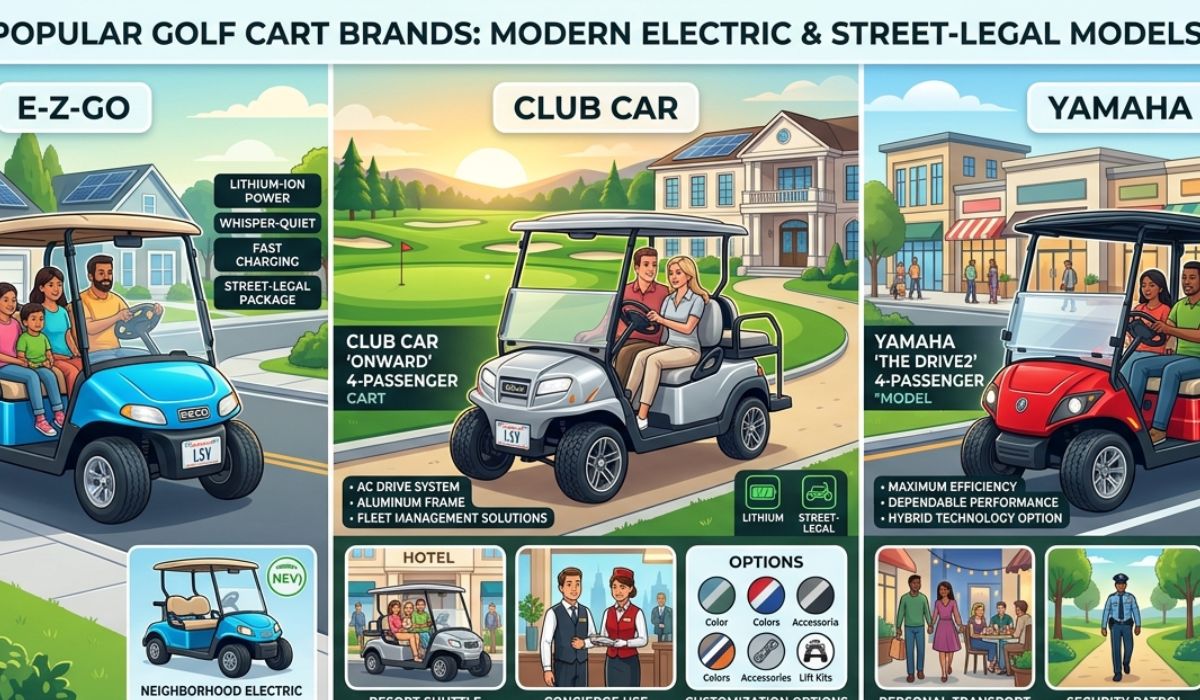
The American market offers many reliable golf models, yet a few manufacturers consistently lead in quality, innovation, and customer satisfaction. Selecting one of the best golf brands in 2026 gives buyers greater confidence, stronger warranties, and better resale opportunities.
Before purchasing, compare warranty coverage, battery technology, dealer support, replacement parts, and available upgrades. A trusted manufacturer often provides better long-term reliability than choosing a lower-priced brand with limited service options.
Club Car
Club Car remains one of the best golf brands because of its premium build quality, dependable engineering, and comfortable ride. Its electric and gas models are widely used in golf courses, gated communities, and commercial properties throughout the United States.
EZGO
EZGO offers practical designs with excellent durability and user-friendly controls. Buyers appreciate the company’s dependable batteries, affordable maintenance, and broad dealer network that makes repairs and replacement parts easy to find.
Yamaha
Yamaha produces durable golf known for smooth handling and reliable engines. Many homeowners choose Yamaha because of its long service life, comfortable seating, and reputation for consistent performance under daily use.
Denago
Denago continues to gain popularity by offering modern styling, advanced technology, and feature-rich vehicles at competitive prices. Many models include premium interiors, digital displays, and factory-installed accessories designed for today’s buyers.
ICON
ICON manufactures stylish golf equipped with LED lighting, premium wheels, digital instrumentation, and advanced suspension systems. These carts provide strong value for families looking for comfort, technology, and dependable everyday transportation.
| Street-Legal Requirement | Usually Required |
| Headlights | Yes |
| Brake Lights | Yes |
| Turn Signals | Yes |
| Seat Belts | Yes |
| Windshield | Yes |
| Mirrors | Yes |
| Horn | Yes |
| Registration | State Dependent |
| Insurance | Often Required |
Golf Maintenance Tips
Regular golf maintenance protects your investment and reduces expensive repairs. A well-maintained golf cart performs better, lasts longer, and keeps passengers safe during every trip. Small maintenance tasks completed throughout the year often prevent major mechanical problems later.
Creating a simple maintenance routine also protects your golf cart value. Whether you own a new or used model, inspecting important components every month improves reliability and reduces unexpected breakdowns. Following a proper golf cart maintenance guide makes ownership much easier.
Battery Care
Battery maintenance remains one of the most important responsibilities for every owner. Keep battery terminals clean, follow recommended charging schedules, and inspect cables regularly. Good care extends battery life and delays costly golf cart battery replacement cost.
Tire Pressure Checks
Correct tire pressure improves handling, braking, and driving comfort. Underinflated tires wear faster and reduce driving efficiency. Checking tire pressure every few weeks helps improve safety and extends tire life.
Cleaning and Exterior Protection
Wash your golf regularly to remove dirt, mud, salt, and debris. Applying protective wax helps preserve the paint while cleaning the seats prevents premature wear. A clean vehicle also maintains better resale value.
Proper Storage Practices
Store your golf cart in a dry garage or covered area whenever possible. Disconnect the charger during long storage periods according to manufacturer recommendations and protect the batteries from extreme temperatures.
Regular Servicing Schedule
Professional servicing once or twice each year helps identify worn brakes, steering components, suspension parts, and electrical connections before they become serious problems. Preventive maintenance usually costs less than emergency repairs.
| Maintenance Item | Recommended Interval |
| Battery Inspection | Monthly |
| Tire Pressure | Every 2–4 Weeks |
| Brake Inspection | Every 6 Months |
| Full Service | Annually |
| Exterior Cleaning | As Needed |
How to Transport a Golf Safely
Transporting a golf requires careful planning because these vehicles are larger and heavier than many people expect. Proper loading, secure tie-downs, and suitable transport equipment reduce the risk of damage during local or long-distance shipping. Professional transportation also saves time and avoids unnecessary wear on your vehicle.
Whether you’re moving across the state or across the country, choosing the right shipping method makes a significant difference. Preparing the golf before pickup also helps ensure a smooth transportation process from beginning to end.
Open Trailer Transport
Open transport remains the most affordable shipping option. Your golf travels on an open trailer together with other vehicles. This method works well for standard carts that do not require protection from weather during transit.
Enclosed Trailer Transport
Enclosed shipping provides extra protection from rain, dust, road debris, and harsh weather. Owners of luxury carts, customized vehicles, and expensive collector models often choose enclosed transport for greater peace of mind.
Professional Golf Transport Services
Professional transport companies use specialized equipment designed for safe loading and unloading. Experienced drivers understand how to secure golf properly, reducing movement and preventing damage throughout the journey.
Preparing Your Golf Before Shipping
Before pickup, clean the golf, remove loose accessories, inspect for existing damage, check tire pressure, and partially charge the battery if it is electric. Taking photos before shipment also provides useful documentation.
Common Transport Mistakes to Avoid
Avoid leaving personal belongings inside the golf during shipping. Never ignore pre-shipping inspections or choose a transporter based only on the lowest price. Working with an experienced company such as SpeedComd helps ensure safe, insured, and reliable nationwide golf transportation.
| Transport Method | Best For | Protection Level |
| Open Transport | Standard Golf Carts | Good |
| Enclosed Transport | Luxury & Custom Golf Carts | Excellent |
| Professional Shipping | Long-Distance Moves | Maximum Safety |
Golf Shipping with SpeedComd
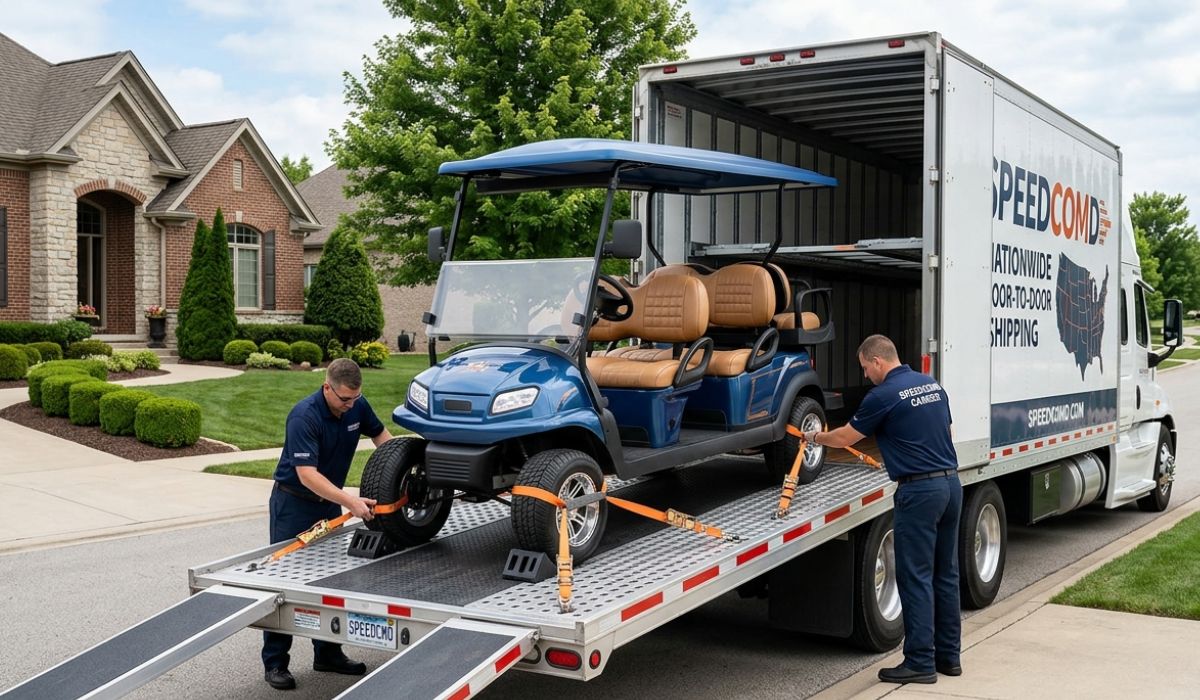
Shipping a golf across the country doesn’t have to be stressful. Whether you’re relocating, purchasing a cart online, or sending one to a vacation home, SpeedComd offers dependable transport solutions throughout the United States. Our experienced team handles every shipment with care so your golf arrives safely and on schedule.
Every shipment receives professional attention from pickup to delivery. We work with trusted carriers, provide regular updates, and protect your vehicle throughout transit. Whether you own a standard cart or a premium model, SpeedComd offers transport options that fit your schedule and budget.
Door-to-Door Golf Transport
Door-to-door service eliminates unnecessary hassle. Whenever road access allows, our carrier picks up your golf from your location and delivers it directly to the destination. This convenient service saves time and reduces extra handling.
Nationwide Golf Shipping
SpeedComd provides nationwide shipping across the continental United States. Whether you’re moving between neighboring states or across the country, our logistics network helps ensure efficient scheduling and reliable delivery.
Open and Enclosed Transport Options
Open transport offers an economical solution for most standard golf carts. Enclosed transport provides additional protection for luxury, restored, or customized models that require extra care during long-distance shipping.
Licensed and Experienced Carriers
Every shipment is handled by licensed professionals with experience transporting recreational and specialty vehicles. Proper loading equipment and secure tie-down methods help protect your golf throughout the journey.
Fully Insured Golf Shipping
Insurance coverage provides added confidence during transportation. While every shipment receives careful handling, insurance helps protect against unexpected situations that may occur during transit.
How the SpeedComd Shipping Process Works
The process begins with a free shipping quote. After scheduling your pickup, our carrier performs a vehicle inspection, safely loads the golf, transports it to the destination, and completes a final inspection upon delivery.
Estimated Golf Cart Shipping Costs
Shipping costs depend on distance, transport type, pickup location, delivery location, vehicle size, and seasonal demand. Open transport generally costs less than enclosed shipping, while longer routes naturally increase the final price.
| Shipping Distance | Estimated Delivery Time |
| 0–500 Miles | 1–2 Days |
| 500–1,000 Miles | 2–4 Days |
| 1,000–2,000 Miles | 4–6 Days |
| 2,000+ Miles | 6–9 Days |
Tips for Buying the Right Golf
Buying a golf becomes much easier when you understand your needs before visiting a dealership. Budget, intended use, seating capacity, battery type, maintenance requirements, and future resale value should all influence your decision. Taking time to compare models helps prevent costly mistakes.
You should also consider transportation after purchase. Many buyers purchase golf from another state because they find better pricing or a wider selection. Reliable nationwide shipping from SpeedComd makes long-distance purchases simple and convenient.
Set Your Budget
Determine your total spending limit before shopping. Include purchase price, taxes, registration, insurance, accessories, maintenance, and transportation so you understand the complete ownership cost.
Choose Based on Intended Use
Think about where you’ll drive most often. A golf course requires different features than a neighborhood, campground, farm, or commercial property. Selecting the right model improves comfort and long-term satisfaction.
Golf Cart Inspection Checklist
Inspect the batteries, brakes, suspension, tires, steering, frame, electrical system, lights, and body condition. A careful inspection helps identify hidden repair costs before completing the purchase.
Financing Options
Many dealerships offer financing programs with flexible payment plans. Comparing lenders before signing a contract may help you secure better interest rates and lower monthly payments.
Best Time of Year to Buy a Golf Cart
Late fall and winter often provide better buying opportunities because customer demand decreases after the busy summer season. Dealers may also offer discounts on remaining inventory before new models arrive.
Questions to Ask Before Purchasing
Ask about warranty coverage, battery age, maintenance history, replacement parts, financing, delivery options, and expected service intervals. Good questions often prevent expensive surprises after purchase.
Frequently Asked Questions
How much should you spend on a golf?
You should expect to spend between $7,000 and $18,000 for a quality new golf, while a good used model usually costs $3,000 to $9,000. If you need nationwide delivery, SpeedComd offers safe and affordable golf cart shipping across the USA.
Is it worth owning a golf?
Yes, owning a golf is worth it if you need convenient transportation for neighborhoods, golf courses, resorts, farms, or large properties. SpeedComd makes ownership even easier by providing reliable nationwide golf transport services.
What’s the average price of a new electric golf?
The average price of a new electric golf cart ranges from $8,000 to $15,000, while premium street-legal models with lithium batteries can exceed $20,000. SpeedComd can safely ship your new golf anywhere in the United States.
Is a golf cheaper than a car?
Yes, a golf cart is generally much cheaper than a car because it has a lower purchase price, lower maintenance costs, and lower operating expenses. When buying from another state, SpeedComd provides secure and cost-effective golf cart shipping directly to your location.
Conclusion
Choosing the right golf requires more than comparing prices. You should consider battery type, seating capacity, intended use, maintenance, resale value, and transportation before making your final decision. A well-informed purchase provides better long-term value and years of dependable service.
If you need safe and professional nationwide golf shipping, SpeedComd is ready to help. Our experienced carriers, transparent pricing, insured transport, and reliable customer support make moving your golf simple. Request a free quote today and let SpeedComd deliver your golf safely anywhere in the United States.



Recent Comments